Materials for Prefabricated House Construction
The proper selection of quality materials and their installation in accordance with professional standards is a true challenge throughout the entire construction process.
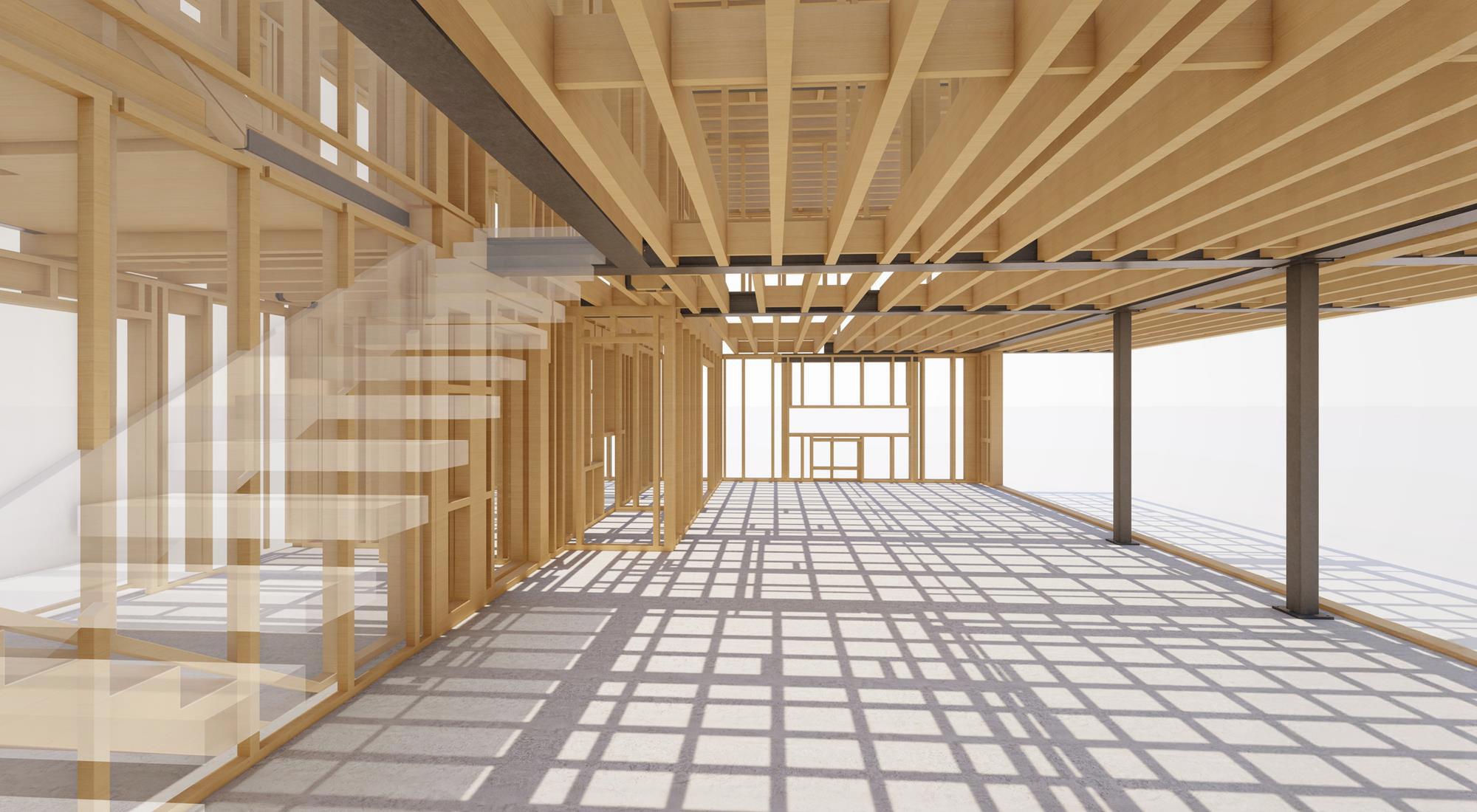
Timber construction across Europe, especially in Central Europe, is experiencing significant growth.
To ensure sustainable development in this branch of construction, it is necessary to build on solid foundations. This means understanding the properties and advantages of wood as a building material, while minimizing or completely avoiding its drawbacks.
Wood plays an important role in environmental protection by helping to control CO₂ levels in the atmosphere. The amount of CO₂ can be influenced by reducing emissions or by removing it from the atmosphere and storing it. Compared to other building materials, wood requires the least energy for production. Every cubic meter of wood used in construction instead of another material reduces CO₂ emissions by an average of 1.1 tons. Since one cubic meter of wood stores 0.9 tons of CO₂ within its structure, each cubic meter of wood directly saves up to 2 tons of carbon dioxide.
The longer wooden structures last, the greater their effect in storing CO₂.
Wood is also far more thermally efficient than other building materials - its insulation properties are 15 times better than concrete, 400 times better than steel, and 1,700 times better than aluminum.
It is highly recyclable - it can be reused to make smaller elements or wood-based panels used in furniture and construction boards. Even when not recycled, it can return energy through combustion. This process releases no more CO₂ than was originally stored in the wood, making it a CO₂-neutral material.
For wooden building construction, timber with moisture content of 15 ± 3% and certified properties matching the design parameters is used. With proper protection measures, structural timber can last for generations.
SHARE